
The Miami scouting trip: three days that answer the real questions
Last reviewed: November 5, 2026. Sources for this page are listed in its fact sheet.
Short answer first. A scouting trip isn't a vacation with extra steps. It has three jobs: test the commute at the hour you'd really run it, stand inside the buildings you're weighing and ask the questions listings don't answer, and check every finalist address against the county's flood and storm surge maps. Three days is enough if each day has one job. Stay in a hotel in the neighborhood you're testing, not across town. In Miami Beach, short-term rentals are prohibited in all single-family homes and in many apartment buildings, and the city counts any rental under six months and a day as short-term, so a hotel is the clean base anyway.
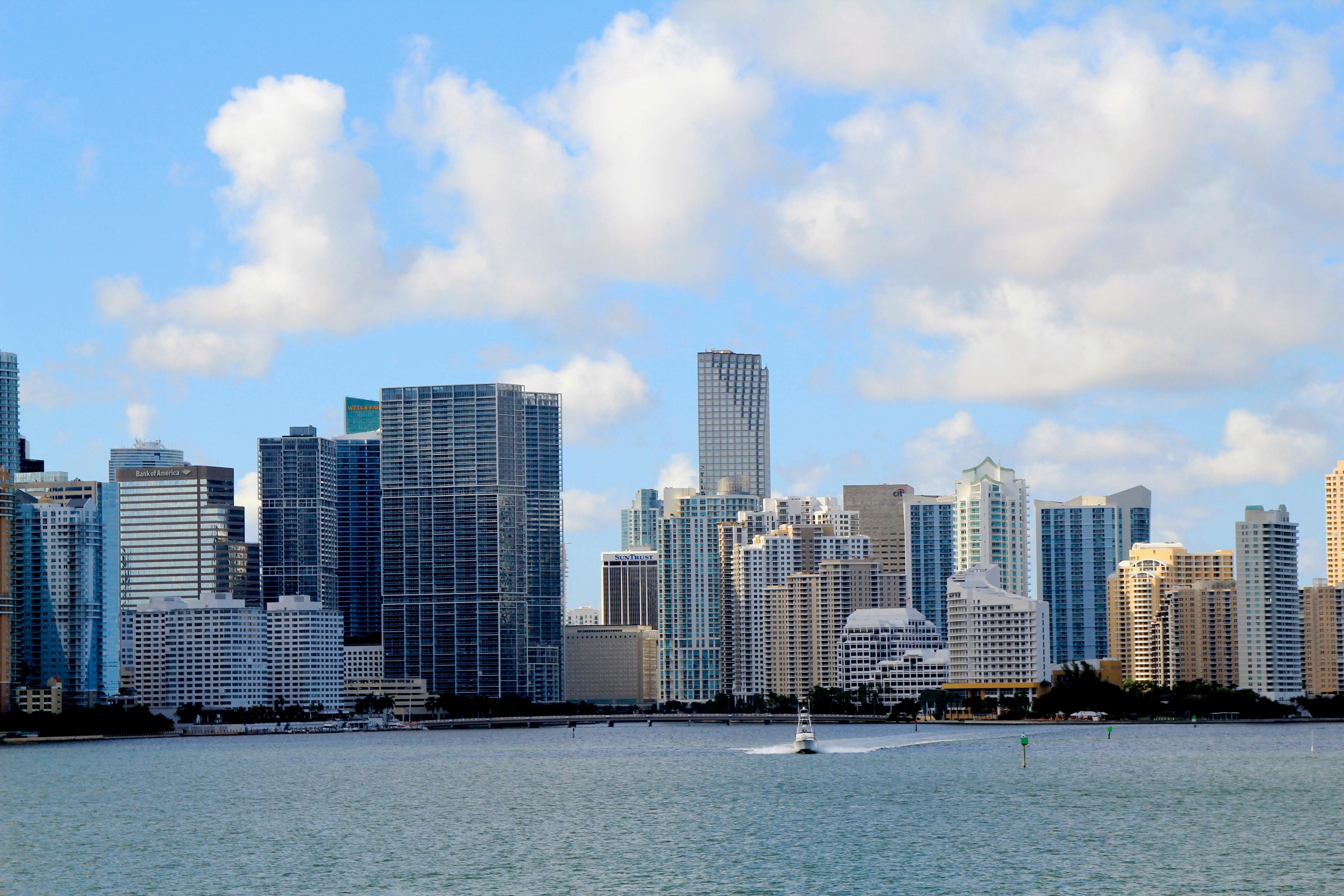
The Miami skyline across the waterfront. Photo: Nicola Vidali, Pexels.
Day one: the commute, tested honestly
Ride your real commute at 8 a.m., not at noon on a Saturday. Miami-Dade Transit runs Metrorail, Metrobus and the Metromover. A one-way Metrorail or Metrobus ride costs $2.25 (discount fare $1.10), transfers between bus and rail are free when you pay by contactless card or EASY Card, and fares cap at $5.65 a day on the same card. The Metromover loops downtown and Brickell for free; you only pay when you step off it onto rail or a bus. Metrorail station parking runs $4.50 a day. Those are the county's published fares, checked November 5, 2026, and they're cheap enough that a full transit test day costs less than parking at most downtown garages.
Coming from farther out, know the rail shape. Brightline's MiamiCentral station sits at 600 NW 1st Avenue downtown, next to the Metrorail and Metromover stations, and runs north through Aventura, Fort Lauderdale, Boca Raton and West Palm Beach to Orlando. Tri-Rail, the commuter line run by the South Florida Regional Transportation Authority, links Miami, Fort Lauderdale and West Palm Beach, and its main line ends at Miami Airport station. Tri-Rail trains into MiamiCentral usually require a transfer at the Metrorail Transfer Station, unless you're on an express run. If a listing brags about an easy Tri-Rail commute downtown, that transfer is the asterisk. Time it yourself.
End the day with one orientation pass. A guided walk resets your mental map faster than any listing site: the Little Havana food and walking tour on Viator reads one neighborhood on foot, and Viator's Miami tours page covers the rest by theme.
Price scouting stays in Miami Beach on Expedia
Day two: buildings, with the flood check built in
Tour in the morning, check addresses in the afternoon. Tours run by appointment through the listing agent or the building's leasing office. In condo buildings, the association application usually comes after a signed lease or an accepted offer, and each association sets its own paperwork and timing, so ask for the building's rental rules in writing while you're standing in the lobby. Ask about the last special assessment too. Then write the answer down.
Back at the hotel, run two county checks on every address that survived the tours. First, the county's Flood Zone Maps page, which is built on FEMA's flood maps and sets the flood insurance picture; the county confirms a flood zone by phone at 305-372-6466. Second, the county's Storm Surge Planning Zones page: zones A through E show which areas face storm surge in hurricanes from Category 1 up to Category 5 only. The county is blunt that surge zones and flood zones measure different water. A building can pass one check and fail the other, and you want to know before the lease, not after the first storm warning.
Day three: daily life and the wild card
Spend the last day on the errands that decide whether a neighborhood fits: the grocery store you'd actually use, the school run route if kids are in the picture, the pharmacy, the gym, the coffee place. Our newcomer neighborhood picker matches areas to life stage, budget and commute, and it names the school anchors and flood patterns area by area. Then spend two hours in the wild card, the one area you ruled out early on price or reputation. Wild cards win more often than people admit. Seeing it costs an afternoon; not seeing it can cost a year.
Sleep on it. Decide at home. The moving to Miami hub sequences what happens next, and the moving checklist runs the twelve weeks once you've picked the area.
Basing near the airport or in Doral instead? Airport area stays on Expedia put the rental car and the Dolphin Expressway at your door, which suits a car-based scouting style.
The facts that matter
Scouting trip facts checked November 5, 2026: Metrorail and Metrobus one-way fare $2.25, discount $1.10, with free bus and rail transfers on contactless or EASY Card payment and a $5.65 daily fare cap; the Metromover is free; Metrorail station parking is $4.50 a day (Miami-Dade County fare page and Implementing Order 04-133). Brightline MiamiCentral is at 600 NW 1st Avenue, Miami. Tri-Rail is run by the South Florida Regional Transportation Authority, and downtown MiamiCentral service usually needs a transfer at the Metrorail Transfer Station. Miami Beach counts a rental under six months and one day as short-term, and short-term rentals are prohibited in all single-family homes and many multifamily buildings (City of Miami Beach Resident Guide). Flood zones come from the county Flood Zone Maps page (FEMA maps; phone 305-372-6466); storm surge planning zones A to E are a separate county check.
Frequently asked questions
How long should a scouting trip be?
Three days minimum: one for the commute, one for buildings and address checks, one for daily life. A week is better if you're also weighing schools.
Should I rent an apartment for the scouting trip?
Book a hotel. Miami Beach bans short-term rentals in all single-family homes and many apartment buildings, and other cities restrict them too. A hotel in the neighborhood you're testing gives you the same mornings without the legal grey area.
What's the cheapest way to test transit?
Pay by contactless card. Transfers are free, the day caps at $5.65, and the downtown Metromover is free on top of that.
Which checks matter most on an address?
Two: the county flood zone, which drives flood insurance, and the storm surge planning zone, which drives evacuation. They're different maps and both are free to check.
Keep planning
Next steps: the neighborhood picker for newcomers, the moving to Miami hub, the Amendment 3 residency deadline guide, and the hotels hub for scouting bases.