
Miami fishing charters: party boat, shared charter or private charter
Last reviewed: November 8, 2026. Sources for this page are listed in its fact sheet.
Short answer first. The license question answers itself, and it is the best news on this page: passengers on a licensed charter, party boat, or guide boat fish under the vessel's Florida charter license and do not need a saltwater fishing license of their own. The product question is about what you are buying a share of. A party boat sells you one seat among strangers on a set schedule. A private charter sells your group the whole boat. A shared charter, the middle product everyone asks about, is not a standard item on Miami operators' own menus; it is a split arranged through brokers and booking desks, and it comes with questions the other two products do not. Prices below come from one named operator's own pages, read on build day, because charter terms are operator facts, not market facts.
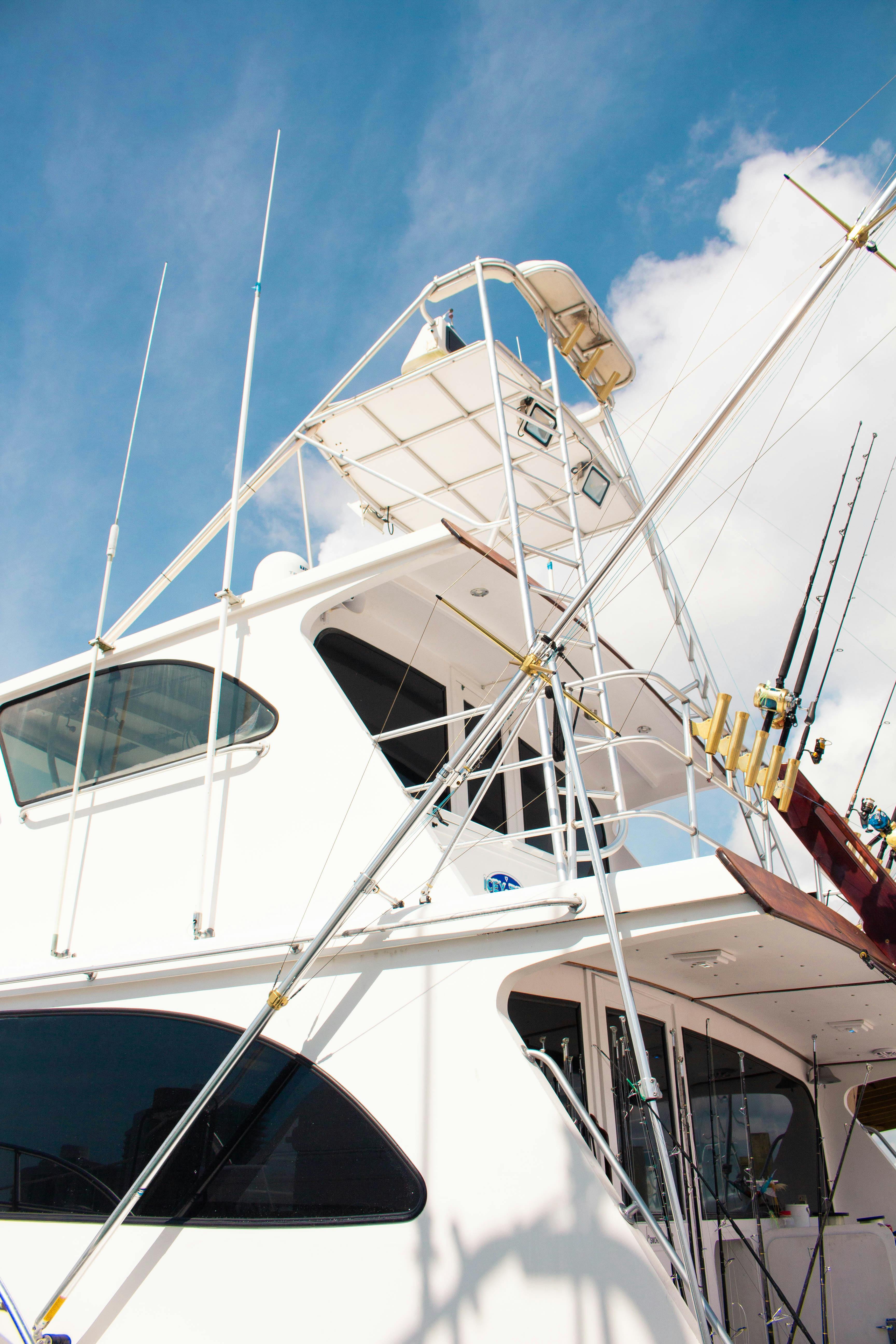
A sport fishing boat with rods set, photographed in Gulf Shores, Alabama. Stock photo. Photo: Lavdrim Mustafi, Pexels.
The license rule, from FWC
The Florida Fish and Wildlife Conservation Commission puts it in one sentence: charter, headboat, and saltwater guide operations must hold an FWC charter captain or boat license to cover their passengers, who are not required to hold a recreational saltwater fishing license. The cover runs only up to the passenger number written on that license, which is one more reason a legal operator never overloads a boat. The rule flips the moment you step off a for-hire vessel. Fishing from shore or from your own or a rented boat takes your own license: Florida residents can hold a no-cost shoreline-only license for fishing from shore or a shore-fixed structure, it is not valid from a vessel, and the resident annual saltwater license costs $17. Visitors fishing without a charter should price the short-term nonresident licenses on FWC's site before they cast, in our boater card guide's companion pages and at myfwc.com.
Party boat: the seat, the schedule, and the shared rail
The party boat, also called a head boat, is the volume product: a large boat, a published departure, a per person price, and a rail you share with whoever bought the other seats. Tackle, bait, and instruction are part of the product, and the crew works the whole rail, which makes it the right first trip for a beginner, a solo angler, or a family testing whether the kids like boats at all. The worked example on this page is The Reward Fleet at Bayside Marketplace, 401 Biscayne Boulevard, Pier 5, whose own pages price open-boat trips from $75 per person and state that party pricing includes all rods and reels, bait, tackle, and licenses, with fish cleaning available for a small fee. Those are Reward's terms, printed with its name on them. Another operator's inclusions will differ in detail, and the detail is what you are paying for.
Private charter: the whole boat, the whole bill
A private charter rents the boat, the captain, and the mate's work for your group alone. The route, the target, and the pace bend to the group: a serious morning on the edge for sailfish and tuna, or a gentle reef trip where the kids reel and the cooler matters more than the count. Reward's private program runs on its 37 foot Topaz, the Legacy, and its terms show the shape of the product: an 18 percent gratuity is added to all private charters, and the same 18 percent is added on open-boat trips for parties of five or more. Read any private quote for the same lines: fuel, bait, tackle, ice, licenses, cleaning, and the gratuity basis, stated before the deposit, not discovered at the dock. Our Miami fishing charters page lists the local fleet and its booking paths, and Viator's Miami water tours listings carry charter products with their inclusions written out per listing.
Shared charter: the middle product, with its caveat
Search engines will sell you a shared or split charter, where strangers split one private boat and its bill. Here is the honest problem: in this page's build-day check of Miami operators' own sites, no operator menu defined a shared product. The splits are assembled by brokers and booking desks, which does not make them a bad deal, it makes them a deal with two extra questions. Who holds the FWC charter license for the trip, the operator or the broker? And what happens to the price, or the trip, if the group does not fill by departure day? Get both answers in writing. A filled split on a licensed boat can be the best value in this whole comparison for a pair of anglers. An unfilled one that quietly converts to a private price at the dock is the worst.
Seasons: what FWC guidance actually supports
Keep the species calendar modest, because the official guidance is more tangled than the brochures. FWC's where-to-fish pages for the Miami-Dade coast list dolphin fish, the mahi of every menu, as an early summer fish in local waters. Sailfish are open to harvest year-round in the regulations, and FWC's spot-by-spot guides place their best local windows differently by location and season, which is a long way of saying a winter sailfish trip is a good bet that no agency guarantees. Tell the captain what you want to catch and let the week's conditions set the target. A charter that promises a species is selling weather it does not control. Bring the kit that makes any of the three products better: seasickness relief taken before the dock, not after the inlet, and a UPF fishing shirt instead of a cotton tee.
The verdict, by group
Solo, a pair on a budget, or first timers: the party boat, morning trip, rail spot near the stern if you can pick it. Two anglers who want a private boat's water at half the logic: a shared split, with the license and fill questions answered in writing. A group of four to six with a target species or a celebration: the private charter, gratuity basis agreed before the deposit. Kids under ten: the shortest party boat trip on the calmest morning, and let the crew do the teaching.
The facts that matter
Fishing facts checked November 8, 2026: passengers under an FWC charter captain or boat license need no individual saltwater license (FWC). The resident shoreline-only license costs nothing and is not valid from a vessel; the resident annual saltwater license is $17 (FWC). The Reward Fleet at Bayside Marketplace, 401 Biscayne Boulevard, Pier 5, prices open-boat trips from $75 per person including rods, bait, tackle, and licenses, charges a small fee for fish cleaning, and adds an 18 percent gratuity on private charters and on open-boat parties of five or more (operator's own pages). Shared charters are broker-arranged splits, not a defined product on the operator menus checked. FWC local guidance lists dolphin fish in early summer; sailfish harvest is open year-round.
Frequently asked questions
Do I need a fishing license on a charter?
No, not as a passenger. The vessel's FWC charter license covers you, up to the passenger count on that license. You need your own license for shore fishing or a boat you run yourself.
What does the crew do with our fish?
On the worked example, cleaning is available for a small fee and the crew handles the catch at the dock. Ask about ice, bags, and shipping before the trip if fish are flying home with you.
Is the tip included?
On Reward's terms, an 18 percent gratuity is added on private charters and larger open-boat parties. Other operators set their own practice. The quote should say which, in writing.
Keep planning
Next steps: the fishing charters page for the fleet, the boat rental, charter or tour verdict for the non-fishing version of this choice, and Miami fishing and water tours on Viator.