
The Florida boater card for visitors: get legal before you rent
Last reviewed: November 5, 2026. Sources for this page are listed in its fact sheet.
Short answer first. If you were born on or after January 1, 1988, Florida law requires an approved boating safety course and a Boating Safety Education ID Card, plus a photo ID, before you operate a boat or jet ski with a motor of 10 horsepower or more. The card never expires. Visitors have two shortcuts: a NASBLA approved course from another state or Canada counts, and Florida runs a temporary certificate exam for exactly your case, valid 90 days. The state fee is $2 and vendors add a service fee, so expect roughly $10 to $12 all in online. Sort it before you book, not at the dock. Rental companies turn people away over this every weekend.
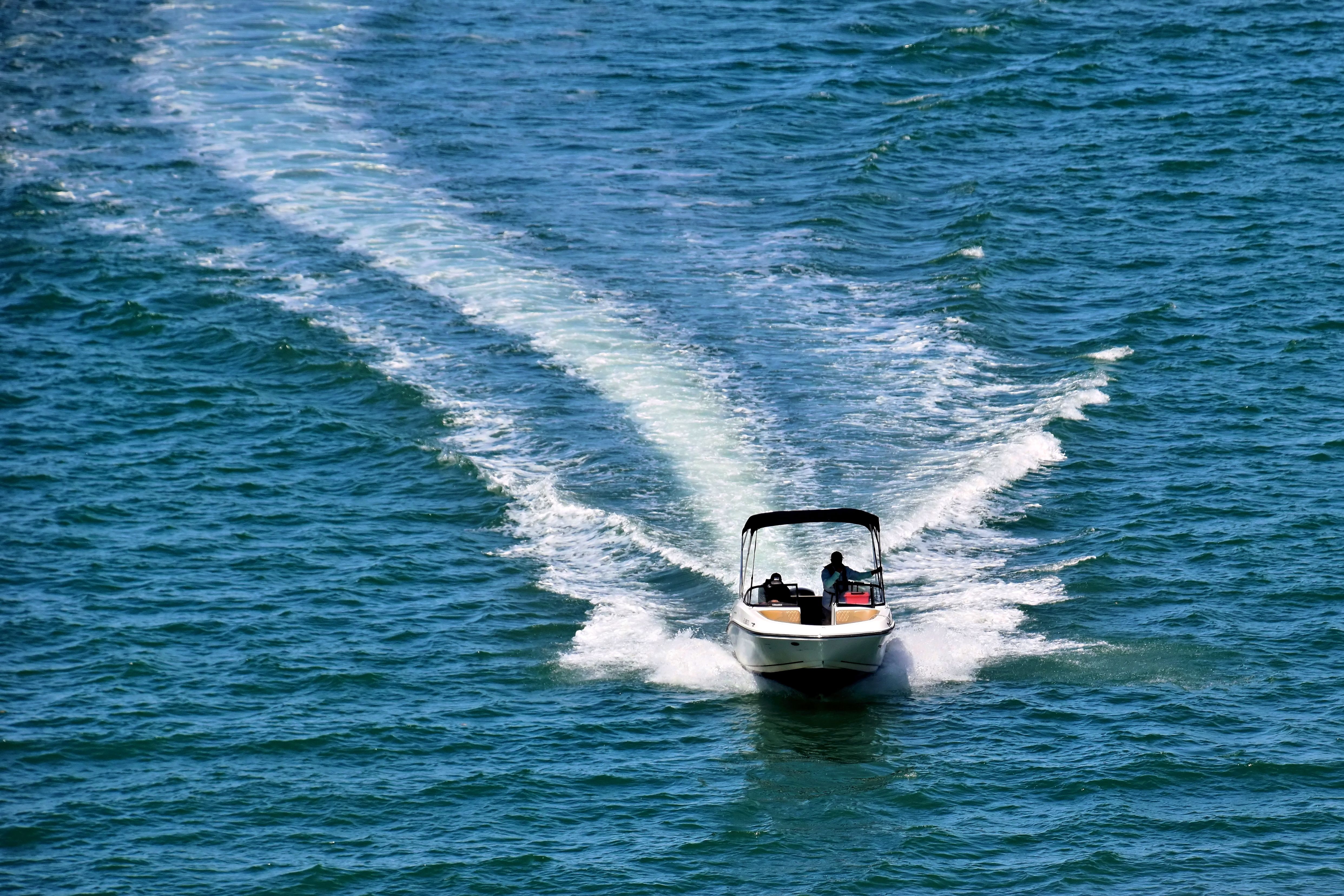
A speedboat on Sarasota Bay, Florida. Stock photo. Photo: Jeffrey Eisen, Pexels.
Step one: check whether the rule applies to you
Three facts decide it: your birth date, the motor size, and whose boat it is. Born before January 1, 1988? The card requirement doesn't apply to you, though a rental company can still set its own rules. Born on or after that date and operating anything at 10 horsepower or more, which covers nearly every rental boat and jet ski in Miami, you need the credential. Operating without it is a noncriminal infraction under Florida law. The Florida Fish and Wildlife Conservation Commission (FWC) runs the system, and its course and card pages on myfwc.com are the source of record for everything below, checked November 5, 2026.
Path one: you already have a course from home
Florida honors boating safety courses approved by NASBLA, the National Association of State Boating Law Administrators, completed in another state or territory, and Canadian boating certificates. If you carry one, bring the card and your photo ID. This is the fastest path and the one most northern visitors already hold without realizing it counts.
Path two: the temporary certificate, built for visitors
No course on file? The FWC's temporary certificate examination exists for you. It's an exam, not a course, offered through FWC listed vendors. The state collects a $2 fee for the certificate, and the vendor adds its own service fee on top. Pass it and you can operate right away under the certificate. One conflict to know about: an FWC regulations page still says a temporary certificate is valid for 12 months, but the current statute, Fla. Stat. 327.395, says 90 days from issuance. The statute governs, so plan on 90 days. The certificate is a bridge, not a substitute for the ID Card, and it doesn't earn you the permanent card.
Path three: take the full course and get the card
If you'll boat in Florida more than once, take an approved course and get the Boating Safety Education ID Card itself. The approved course list lives on myfwc.com, and this page links the FWC list rather than picking commercial providers for you. The card does not expire. One related rule gets misread often: after passing an approved course, the statute lets a boater operate for up to 90 days on the course completion certificate while the card is issued, whatever state they call home. That window follows a full course, though. If you have not taken one, your bridge as a visitor is the temporary certificate exam in path two, not a course receipt.
Keep the paperwork dry and reachable: a waterproof document case on Amazon holds the card, photo ID and rental contract in one place.
The rental company rule, and its limit
Florida law also works the other side of the counter. A licensed rental operation, called a livery in the statute, must give safety instruction to the people who will operate its boats, and FWC states that liveries must give pre-rental instruction to all potential operators. Ask the company which rule your booking runs under, because the instruction path and the card path are different legal routes and the company decides what it accepts at check-in. What you can't do is assume a briefing replaces the credential on a private boat. Borrowing a friend's boat is not a livery rental, and the card rule applies in full.
Sorted? Then put the credential to work. Our boat and jet ski verdict pages are next in this series, and they compare renting your own boat against a captained charter and a guided jet ski tour. If you'd rather skip the credential entirely, a captained tour puts the licensed operator at the helm instead: Viator's Miami tours page lists the boat tours and fishing charters that run that way.
The facts that matter
Boater card facts checked November 5, 2026 against FWC and the Florida Statutes: anyone born on or after January 1, 1988 needs an approved boating safety course and the Boating Safety Education ID Card, plus photo ID, to operate a vessel of 10 horsepower or more in Florida. The card does not expire. NASBLA approved courses from other states and territories and Canadian certificates are honored. The visitor temporary certificate exam is valid 90 days under Fla. Stat. 327.395; the state fee is $2 and FWC listed vendors add a service fee; an FWC page stating 12 months conflicts with the statute, and the statute governs. The statute's 90 day course completion window (subsection (6)(f)) carries no residency limit. Liveries must provide pre-rental safety instruction to all potential operators.
Frequently asked questions
I'm visiting from Canada. Does my boating card count?
Yes. Florida honors Canadian boating certificates and NASBLA approved courses from other states and territories. Carry the card and a photo ID.
How long does the temporary certificate last?
90 days from issuance, per Fla. Stat. 327.395. One FWC page still says 12 months; the statute is the authority.
Does the rule cover jet skis?
Yes. A jet ski is a vessel with a motor well over 10 horsepower, so the same course and card rule applies if you were born on or after January 1, 1988.
Do I need the card on a fishing charter?
No. The captain operates the boat. The card rule is for people operating a vessel themselves, which is why charters and captained tours are the no-credential option.
Keep planning
Next steps: Viator's Miami tours page for captained options, the tours hub, and the guides hub for the rest of the visitor logistics series.