
Check any Miami address: flood zone, storm surge zone and base flood elevation in five minutes
Last reviewed: November 7, 2026. Sources for this page are listed in its fact sheet.
Short answer first. One address has three separate map answers, and mixing them up is how buyers get this wrong. The flood zone comes from the FEMA insurance map and drives whether a federally backed mortgage forces flood insurance, and what the policy costs. The storm surge planning zone, letters A through E in Miami-Dade, is about evacuation planning for a hurricane, and it answers a safety question, not an insurance question. Elevation is the third leg: how high the home's lowest floor sits against the base flood elevation on the map. Run the three lookups below in order on every finalist home or rental. Five minutes each. The county will even confirm the flood zone by phone at 305-372-6466.
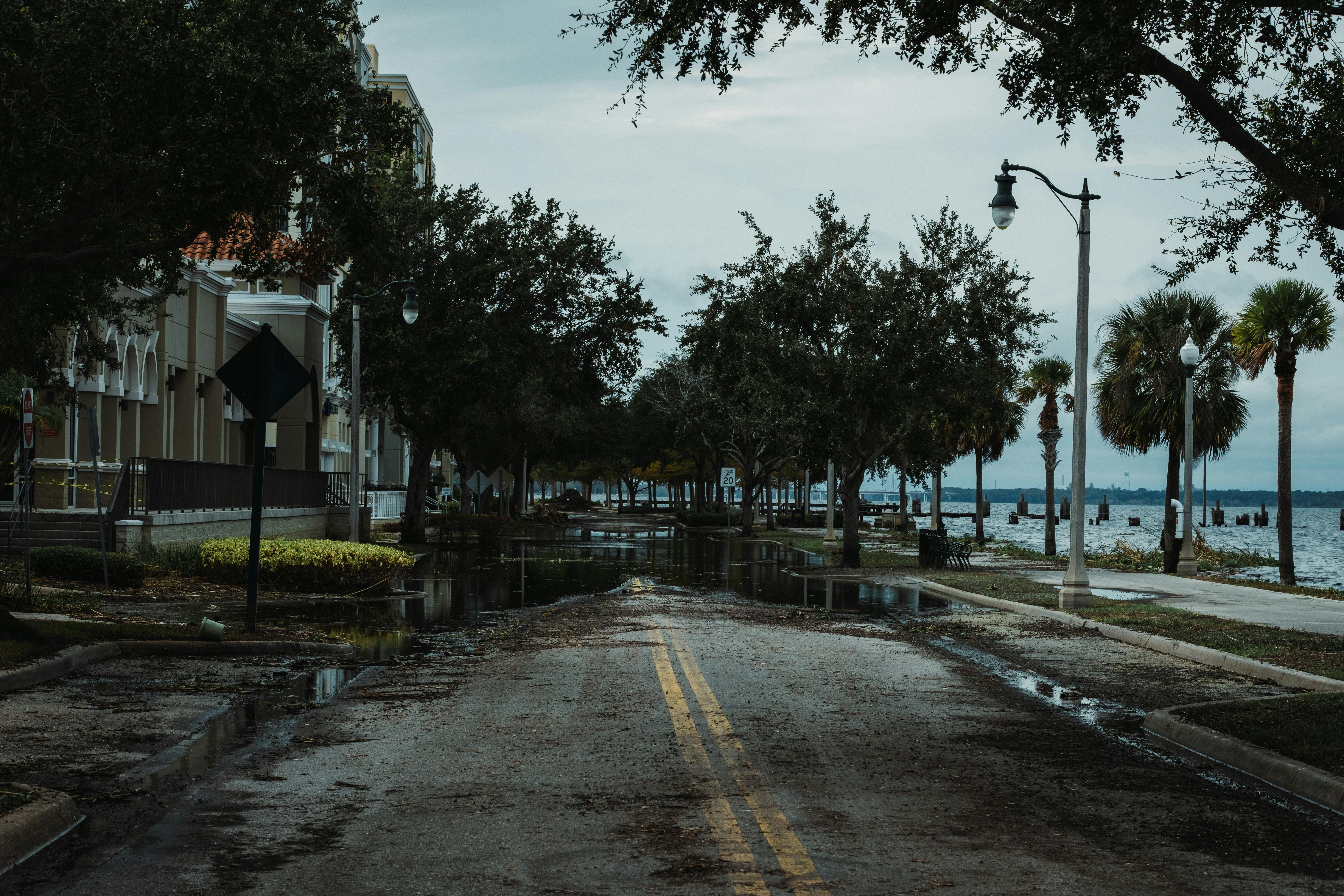
Standing water on a city street after rain. Stock photo. Photo: Connor Scott McManus, Pexels.
Lookup one: the flood zone in the county tool
Start at Miami-Dade County's flood zone map, linked from the county's flood protection pages at miamidade.gov. Type the address and read the zone letter. The letters, in plain English from FEMA's definitions: VE is the coastal high hazard area, a 1 percent annual chance of flooding plus storm wave action, with base flood elevations shown. AE is the workhorse high risk zone, a 1 percent annual chance with base flood elevations set. AH and AO are shallow flooding zones, ponding or sheet flow at average depths of 1 to 3 feet. X shaded sits between the 1 percent and the 0.2 percent annual chance lines, moderate risk. X unshaded is outside the 0.2 percent line, low risk. Low is the word. It isn't no risk, and FEMA's current figure makes the point: almost one third of NFIP flood claims in the 2014 to 2024 data came from outside the mapped high risk areas.
Two habits protect you here. First, treat the tool's answer as the reading and the county's confirmation as the ruling: the county itself tells you to call its Flood Zone Hotline at 305-372-6466 for confirmation of a property's official flood zone designation, and a closing file deserves that call. Second, ask which map the answer came from. FEMA map updates move through a preliminary stage before they become the legal, effective map, and a home can read differently on a preliminary map than on the effective one. If a seller quotes a zone, ask for the map date behind it. Once the zone is settled, the insurance quote is the next step, and the zone letter you just read is the first thing the quote will ask about.
What the flood zone changes
If the home sits in a Special Flood Hazard Area, the A and V family of zones, and your mortgage is federally backed, flood insurance is mandatory. That's a federal rule, not a lender's mood. If the home sits in X, the choice is yours, and the claims figure above is the argument for pricing a policy anyway. Either way, one timing rule catches movers: a new NFIP policy has a standard 30 day waiting period before coverage takes effect, with narrow exceptions such as a loan closing. You can't watch a storm form, buy a policy, and be covered. The purchase has to happen on a calm week, which for most buyers means right after the zone check, not right before closing. Contents cover for renters exists too under the NFIP, so a rental in a high risk zone isn't an automatic shrug. Run the same lookup on a rental address before you sign, and read our sight unseen renting routine for the rest of the remote checks.
Lookup two: the storm surge planning zone
Now switch tools and questions. Miami-Dade's Storm Surge Planning Zones run A through E and they're built on storm surge modeling, the SLOSH model, for surge of 1.5 feet or higher. Zone A is at risk from a Category 1 storm upward, B from Category 2, C from Category 3, D from Category 4, and E only from a Category 5. The county's own FAQ states the separation plainly: flood zones and storm surge planning zones are figured by different methods and serve different purposes. A planning zone is also not an evacuation order. When a storm comes, officials order evacuations for all or part of a planning zone for that specific storm. Your lookup tells you which zone your address sits in, through the county's zone tools and 311. Your plan then writes itself: know your zone, know where you'd go, and don't read an insurance answer into a surge letter or a surge answer into an insurance letter.
Lookup three: elevation and the elevation certificate
The third lookup is a document, not a map. An elevation certificate, on FEMA form FF-206-FY-22-152 and filled out by a licensed surveyor, engineer or architect, records a building's lowest floor and related heights against the base flood elevation for its zone. Under the current NFIP rating system an elevation certificate isn't required to buy or rate a policy, since FEMA works from its own first floor height estimate, but filing one can lower a premium when it shows the home sits higher than the estimate, and filing one won't raise an existing premium. Certificates also turn up in floodplain permits and in map change requests. Before you pay for a fresh survey, ask the seller and the county whether a certificate for the property already exists on file. Plenty do. A certificate in a drawer is a free lookup.
The facts that matter
Flood facts checked November 7, 2026: Miami-Dade's flood zone map reads the FEMA Flood Insurance Rate Maps, and the county gives 305-372-6466 for official zone confirmation (miamidade.gov flood protection). Zone letters follow FEMA definitions: VE coastal high hazard with wave action, AE 1 percent annual chance with base flood elevations, AH and AO shallow flooding at 1 to 3 feet, X shaded moderate, X unshaded low. Flood insurance is mandatory for federally backed mortgages in the Special Flood Hazard Area. New NFIP policies carry a standard 30 day waiting period (floodsmart.gov). Almost one third of NFIP claims in 2014 to 2024 came from outside high risk areas (FEMA). Storm Surge Planning Zones A to E are a separate surge based system (Miami-Dade Emergency Management).
Frequently asked questions
The seller says the home is not in a flood zone. How do I check?
Run lookup one yourself, then call the county hotline at 305-372-6466 and have the confirmation tied to the address. A seller's sentence is not a map.
Zone X. Am I done?
For the lender, yes. For your own risk call, read the claims figure on this page and price a policy. Then do lookup two, because your surge zone can still be an early letter.
Does this apply to condos?
The zone lookup does, and the building's master policy and your unit policy split the cover between the association and you. Pair this page with the condo document check before you offer.
Keep planning
Next steps: the moving to Miami hub, the newcomer neighborhood picker, the condo document check, and waterproof document storage on Amazon for the closing file once the checks come back clean.