
Ship a car to Miami: drive it, ship it or sell it first
Last reviewed: November 6, 2026. Sources for this page are listed in its fact sheet.
Short answer first. You have three ways to solve the car on a New York to Miami move, plus a train. Ship it on a carrier, drive it about 1,280 miles yourself, sell it and buy in Florida, or put it on the Amtrak Auto Train for the Virginia to Florida leg and ride with it. Published figures, pulled November 6, 2026, put open transport from New York to Miami at $1,070 to $1,670 for a standard sedan from one carrier's route guide, while a second carrier's shipment data averages about $1,112 for open transport in the same distance band. The two sources measure different things, so this page prints both and labels each. Carrier pricing is quote based and seasonal. Any single number a quote funnel gives you before it knows your car, your dates and your addresses is a teaser, not a price.
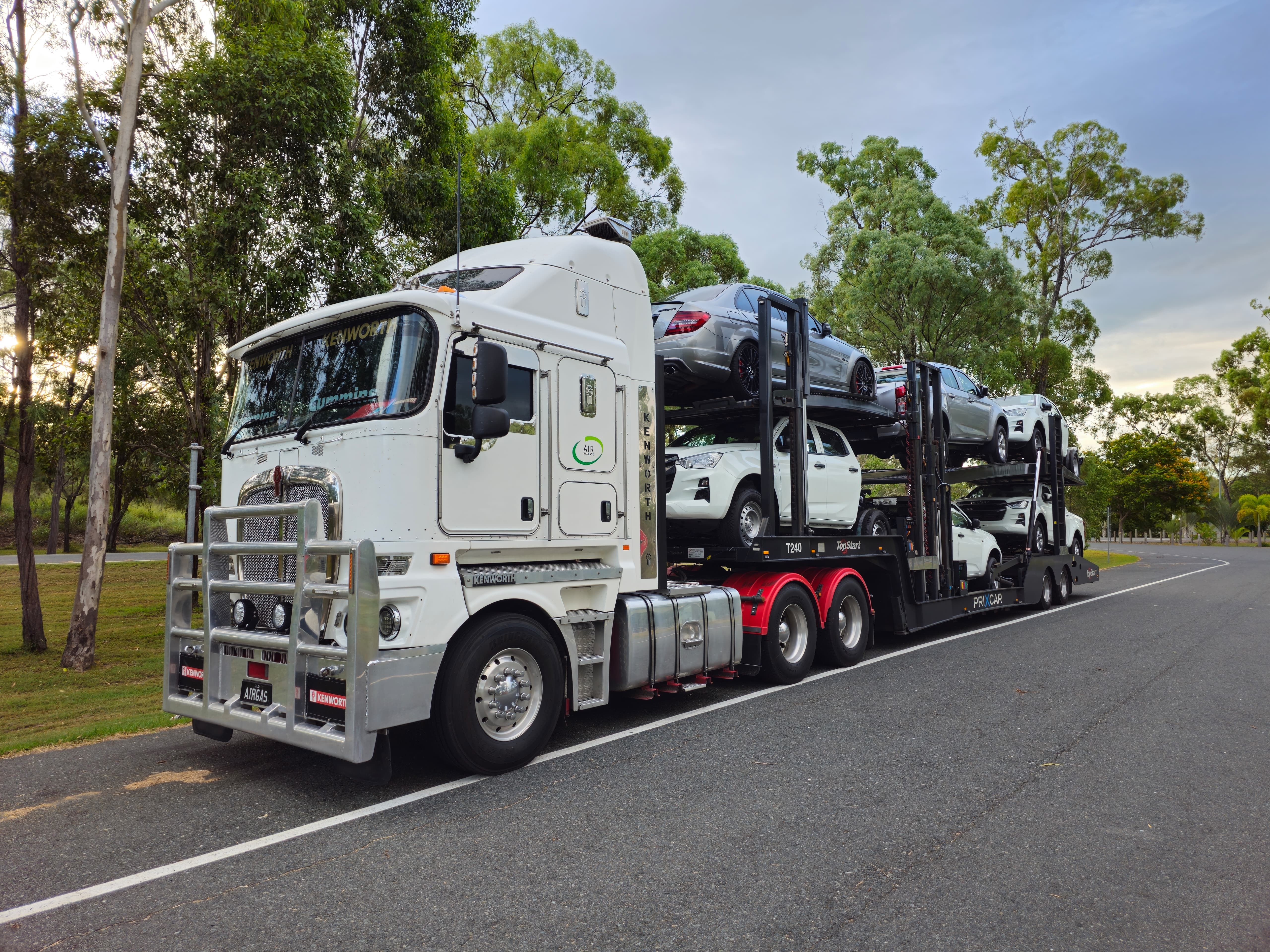
A loaded car carrier on the road, in Queensland. Stock photo. Photo: Elite Transport Solutions, Pexels.
The words on the quote, in plain English
Open transport is a car carried on an open multi car trailer, exposed to weather and road debris. It's the standard product, the most common way cars move in the US, and the cheapest. Enclosed transport puts the car inside a covered trailer with added protection, at a higher price, and it's the usual pick for classic, exotic and high value cars. Door to door means pickup and delivery as close to your named addresses as the driver can safely and legally reach. Terminal to terminal means you drop the car at a designated terminal and collect it from one at the other end; it can cost less, and the car can wait at the terminal until a full load is ready. Definitions follow Montway Auto Transport's published explainers, checked November 2026.
One legal note before the prices. Cars are not household goods, and the federal household goods rules that protect a furniture move do not cover an auto carrier in the same way. Don't sign a car contract assuming the moving booklet rules from our moving costs guide apply here. Read the carrier's own terms, its insurance terms most of all.
What shipping costs, from two published sources
Source one: a carrier's published route guide. American Auto Shipping's New York, New York to Miami, Florida page, pulled November 6, 2026, prices a standard sedan at $1,070 to $1,670 on open transport and $1,600 to $2,500 enclosed, over 1,285 miles, with transit at 4 to 6 days. The page states these are estimates from its published pricing formula, not quotes for your car. The same page applies a November seasonal adjustment of plus 15 percent, which is the carrier itself telling you fall southbound pricing runs hot. Quote your own dates before you budget on these lines.
Source two: a carrier's shipment data. SGT Auto Transport's State of Auto Transport 2026 report, published September 9, 2026 from 30 months of its own completed single vehicle open shipments, puts the 1,000 to 1,499 mile band at an average of 1,257 miles and $0.89 a mile, an average total of about $1,112 on open transport. Its enclosed figures for the 1,000 to 1,500 mile band run $0.92 a mile. Averages hide the spread your dates will land in. The two sources agree on the shape, roughly $1,100 to $1,700 open for this distance in fall 2026, and that's the honest planning band this page will stand behind.
The drive it yourself math
Driving is about 1,280 miles via I-95, roughly 19 to 20 hours of wheel time, which means two driving days for almost everyone. The cost parts are fuel for the distance, one hotel night, food on the road, and two days of your time, plus 1,280 miles of wear on a car you're about to register in a state with high insurance costs. The drive wins when the car is worth little, when you need it in Miami the day you arrive, or when the trip itself has value to you. It loses when a second driver, a pet, a child or a tight arrival date turns two highway days into the worst part of the move. If you drive, road trip basics on Amazon, a phone mount, a tire gauge and an emergency kit, are the cheap insurance.
The fourth option: the Amtrak Auto Train
The Auto Train runs nonstop from Lorton, Virginia to Sanford, Florida, and you ride in the passenger cars while your car rides in the carriers. Amtrak runs one round trip a day on the route. Amtrak markets the train as saving 900 miles of I-95 driving, and that figure is the Lorton to Sanford leg only. You still drive New York to Lorton at the top and Sanford to Miami at the bottom, about 230 miles. It's a real fourth option, not a full substitute.
The rules that decide if your car fits, from Amtrak's Auto Train pages, checked November 2026: a vehicle is required, there's no checked baggage service, and check in begins at 11:30 a.m. Standard and extended vehicles must check in by 2:30 p.m.; motorcycles, oversized vehicles, trailers and Priority Offloading by 2:00 p.m. A standard vehicle can be up to 192 inches long, 85 inches high and 84 inches wide including mirrors, with at least 4 inches of ground clearance. Extended vehicles can run to 216 inches long, and anything over 18 feet needs special arrangements and a second space. Dual wheel trucks, gull wing and scissor door cars cannot be accepted, and Can Am motorcycles, Rewaco trikes and Polaris Slingshots are not permitted. Measure your car before you book, not at the Lorton curb.
Sell it first: when that wins
Selling wins when the shipping quote approaches the car's value, when the car is near a major repair, or when you'd replace it within a year anyway. It also wins for a second car a household can live without during the first Florida months. What it costs is time at both ends: a sale in New York on a moving deadline rarely gets top price, and a purchase in Florida starts your insurance and registration clocks immediately. There's no published figure for that trade, so this page won't invent one. Run your car's real sale value against the shipping band above and decide with your numbers.
When the car lands, whichever way it travels
A shipped car gets no grace period. It needs Florida insurance from a Florida licensed agent, then title transfer and registration within 10 days of establishing residency, the same deadlines as a car you drove down yourself. Our Florida license and plates sequence runs the full order, the fees and the VIN check, step by step.
The facts that matter
Car shipping facts checked November 6, 2026: American Auto Shipping's published New York to Miami route guide prices a standard sedan at $1,070 to $1,670 open and $1,600 to $2,500 enclosed over 1,285 miles, transit 4 to 6 days, with a November seasonal adjustment of plus 15 percent, stated as formula estimates, not quotes. SGT Auto Transport's State of Auto Transport 2026, from 30 months of completed open shipments, averages the 1,000 to 1,499 mile band at 1,257 miles, $0.89 a mile, about $1,112 total. The drive is about 1,280 miles via I-95, roughly 19 to 20 hours of wheel time. Amtrak's Auto Train runs Lorton, Virginia to Sanford, Florida nonstop, one round trip daily, with check in from 11:30 a.m. and vehicle size limits as listed above (amtrak.com). Florida title and registration are due within 10 days of residency, with Florida insurance in force first (flhsmv.gov).
Frequently asked questions
Open or enclosed for an ordinary car?
Open. It's the standard product and the price gap, $1,070 to $1,670 against $1,600 to $2,500 on the route guide above, buys protection an ordinary daily car rarely needs.
How long does shipping take?
The route guide above says 4 to 6 days in transit for New York to Miami. Pickup windows and terminal waits sit on top of that, so don't plan a car dependent day on the delivery date itself.
Can I put boxes in the car before it ships?
Carrier terms govern, and they vary. Ask your carrier in writing. This page prints no general rule because no general rule exists.
We have two cars. What do most households do?
The common split is to drive one and ship one, which is why this guide prices both. The moving checklist puts the car decision on the timeline where it belongs, about four weeks out.
Keep planning
Next steps: the Florida license and plates sequence, the moving costs and methods comparison, the Miami moving checklist, and the moving to Miami hub.