
Enrolling your kids in Miami-Dade public schools: documents, boundaries and the magnet deadline
Last reviewed: November 8, 2026. Sources for this page are listed in its fact sheet.
Short answer first. Miami-Dade enrolls your child at the public school assigned to your home address, and general enrollment happens in person at that school, not online. Bring proof of age, two proofs of residence, and your child's health records, and handle one step before you arrive in Florida if you can: out-of-state vaccine records do not enroll a child until a Florida provider has transferred them onto Florida's immunization form, the DH 680. That transfer is the delay that catches new families. The magnet programs run on a separate track with a hard deadline, and that window is open right now: applications for the 2027-28 school year close January 15, 2027. Everything below is the district's own process, in the order the school office will work it.
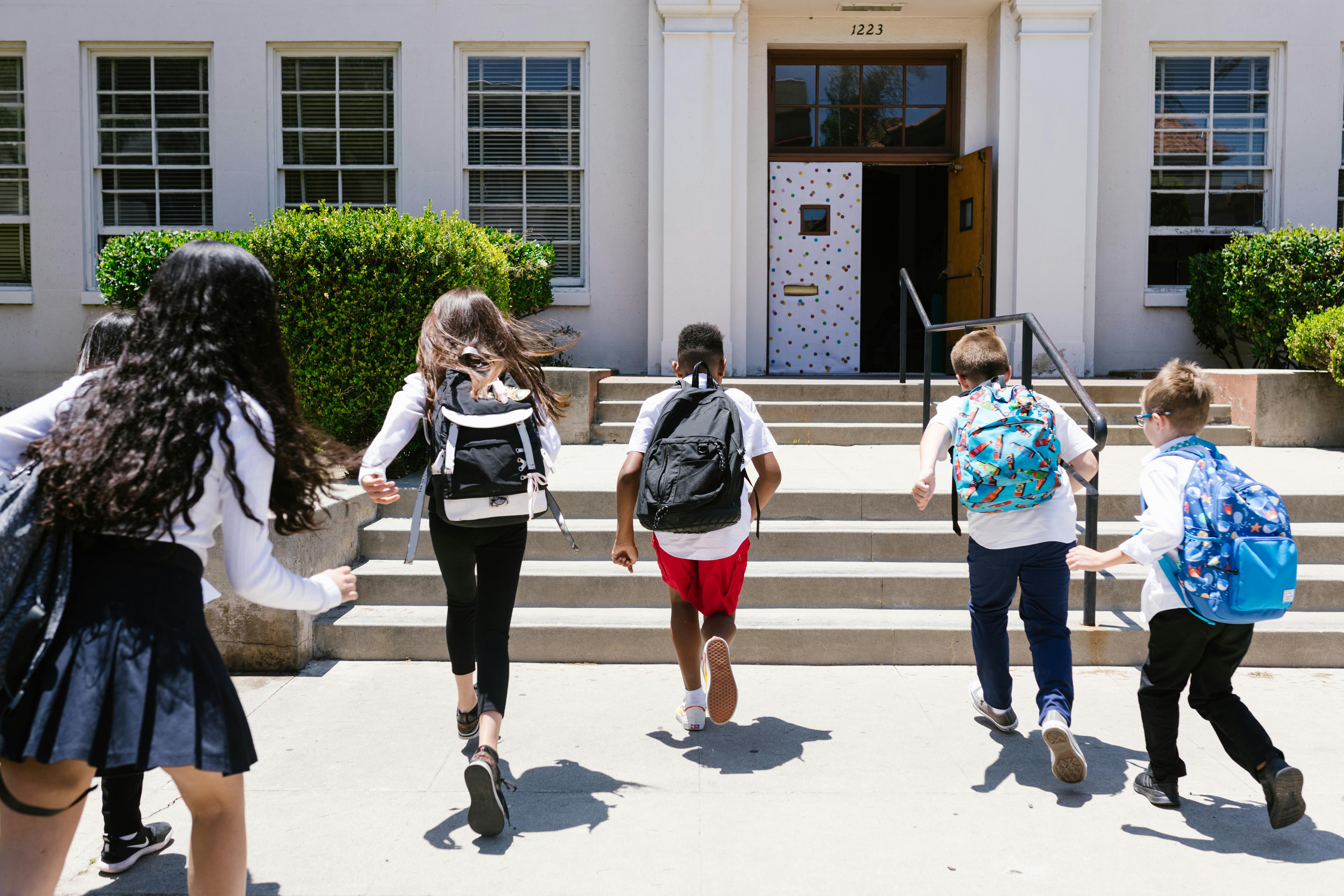
Students heading into school. Stock photo, not a Miami-Dade school. Photo: RDNE Stock project, Pexels.
Step one: find the home school, then go there
Every student is assigned to a designated school based on where the parents live, and School Board Policy 5112 sets the entrance requirements the office applies. There is no central enrollment center and no general online registration for a neighborhood school: you present yourself and your child at the assigned school with the document set. Families still house-hunting should treat the school boundary as a housing fact, not an afterthought. Our newcomer neighborhood picker weighs school anchors alongside rent and flood exposure for exactly that reason, and the district's school locator confirms the assigned school for any finalist address before you sign a lease.
Proof of age: the document list
The district's preferred proof is an original birth certificate. A hospital certificate does not count. A passport or a certificate of arrival showing the child's age is also on the accepted list, and the district's registration guide and handbook carry the full set of alternatives, which runs to baptism records with a parent affidavit and older school transcripts stating a date of birth. If you arrive with nothing acceptable, the door does not close: the principal enrolls the student temporarily and gives the parent 30 calendar days to produce proper proof. Use that window only if you must. A temporary file follows the child until it is completed.
The health forms: DH 680 and the entry exam
Two health documents, and they are not interchangeable. Immunizations must be documented on the Florida Certificate of Immunization, Form DH 680, which has to be completed by a Florida licensed physician, an advanced practice registered nurse, or the county health department. The form is not handed out to the public, and a shot record printed by a clinic in another state or another country is source material for the transfer, not the enrollment document itself. Book that transfer appointment before the move if your new address is settled, or in the first days after arrival. Separately, a child entering a Florida school for the first time, from prekindergarten through grade 12, needs a school entry health examination completed within one year before enrollment. The state's DH 3040 is the recommended form, and a comparable out-of-state exam form inside the same year is accepted, so a recent physical at your old pediatrician is not wasted.
Proof of residence: two documents
Address verification takes two documents from the district's list. The working set for most movers: a broker's or attorney's statement of purchase, or a properly executed lease; a current Homestead Exemption Card once you have one; or an electric deposit receipt or electric bill showing your name and the service address. The school also takes a Statement of Bonafide Residence, form FM-7444, at registration. Renters in condo buildings should expect the association paperwork and the lease to be read together. Bring the signed lease, not a listing printout.
The Social Security number: requested, never required
The registration packet asks for the child's Social Security number, and Florida law, section 1008.386, requires the district to request it. The same statute states the limit in plain words, and the district repeats it: a student is not required to provide a Social Security number as a condition of enrollment or graduation. International families arranging documents should hear that clearly, because it is the question that generates the most panic and the least actual obstruction. What international arrivals do need is the DH 680 transfer above and, at registration, the Home Language Survey: three questions about the languages in your home and your child's first language. Any yes answer routes the child to an English proficiency screening, with listening and speaking assessed within 20 school days, so ESOL support is placed early instead of discovered late. Our page for moving to Miami links the arrival sequence this step belongs to.
VPK: free means three hours
Florida's Voluntary Prekindergarten program is free for children who turn four on or before September 1 of the school year. Read the free part precisely: the state-funded block is three hours, running 8:20 to 11:20 a.m. in the district's procedures. The rest of the day is an extension, funded by Title I at Title I schools and fee based elsewhere, at $15 a day or $12 at the reduced rate in the district's current procedures. A family budgeting childcare on the word free should budget the extension. VPK and magnet applications both run through the district's Parent Portal, which is the portal's actual job; neighborhood school enrollment, again, is in person.
The magnet deadline: January 15, 2027
Magnet and choice programs are the district's parallel system: themed schools and programs that take applications from across the county instead of by address. For the 2027-28 school year the application period opened October 1, 2026 and closes January 15, 2027 at 11:59 p.m., through the Parent Portal, with results on March 15. It is a hard annual window, and it is open on the day this page publishes. Families arriving mid-year enter through a different process and should ask the district directly rather than waiting for the next window to be announced. If a magnet program is part of your reason for choosing a neighborhood, the application belongs on the same calendar as the lease signing, not after it.
The facts that matter
Enrollment facts checked November 8, 2026 from Miami-Dade County Public Schools and the Florida Department of Health: enrollment is in person at the school assigned by residence under Policy 5112. Proof of age starts with an original birth certificate (hospital certificates are not accepted); missing proof means temporary enrollment with 30 calendar days to produce it. Immunizations must sit on Form DH 680, completed by a Florida provider; the entry health exam must fall within one year. Address verification takes two documents from the district list. An SSN is requested under section 1008.386 and is not a condition of enrollment or graduation. VPK is free for the three-hour block for children who are four by September 1. The 2027-28 magnet window runs October 1, 2026 to January 15, 2027.
Frequently asked questions
Can I enroll before we have a Florida address?
No. The assigned school follows the residence, and address verification is part of registration. Families in temporary housing should talk to the district about their specific situation rather than borrowing an address.
Our vaccine records are from another country. What happens?
A Florida provider or the county health department transfers them onto the DH 680. Build days for that appointment into the first week, and bring the original records, translated if the clinic asks for it.
We missed the magnet window. Now what?
Your child enrolls at the home school, which is the default for most Miami-Dade students in any case, and mid-year magnet entry runs through the district's separate process. Ask the district, and mark October 1 for the next cycle.
Keep planning
Next steps: the neighborhood picker to choose the address that chooses the school, the first 90 days checklist, and the moving to Miami hub.